

"Return to Sender: Insufficient Postage" is an expensive line of text. On a birthday card it is an annoyance. On four hundred legal agreements due by five o'clock, it is a missed deadline with contractual consequences.
Large flat envelopes are where offices get this wrong most often, because the pricing rules change the moment a piece stops being a letter.
The baseline number
A 1 oz large flat envelope requires $1.50 in postage. How many stamps that takes depends on the denominations you are working from, so check the value of what is in your drawer rather than assuming a count — this is the step where offices routinely overpay by a wide margin.
That is the figure to memorize, and it is only the starting point. Each additional ounce adds to it, so a genuinely heavy contract package needs the weight taken rather than estimated. For daily prep, work from the USPS Notice 123 price charts rather than from memory.
Why "flat" is a pricing category, not a description
A large envelope qualifies for flat rates only if it is rectangular, flexible, and of uniform thickness. Fail any of those and it is priced as a parcel, which costs considerably more.
The common failures are predictable: a rigid document folder inside, a bound contract that creates a lump, clasps and string closures, or contents that shift and leave the envelope thicker at one end. Each one moves the piece into a different — higher — price band, and none of them is obvious when you are looking at a stack of identical-seeming envelopes.
Weigh it. Do not estimate it.
Paper weight is not intuitive. A twenty-page contract with a cover sheet, a return envelope and a compliments slip crosses ounce boundaries in ways that surprise people who have been mailing for years.
A cheap postal scale removes the entire problem. Weigh one representative piece from each batch, calculate once, and apply that figure across the run. It takes thirty seconds and it is the difference between four hundred delivered contracts and four hundred returned ones.
The other way mail gets stopped
Underpayment is not the only reason a batch fails. Counterfeit postage is the other, and offices walk into it while trying to control costs.
Genuine stamps carry phosphor tagging. Automated sorting equipment checks for that fluorescence on every piece, and stock that lacks it gets pulled rather than delayed. Postage bought from an unverified seller advertising 40% savings during a busy season is very often untagged, and the organization whose name is on the envelope is the one that answers for it.
The tell is always the same: a discount far beyond what the secondary market can actually support. Authentic postage bought in volume supports roughly 10–20% off. It does not support 40%.
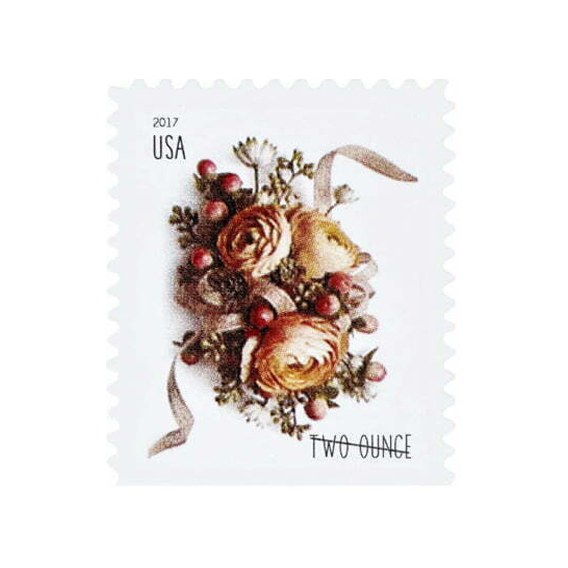
Best deals on Forever stamps


A simple vetting routine
Three checks on every replenishment, whatever the source:
- Adhesion. Pull five samples at random. Genuine self-adhesive stock uses a permanent pressure-sensitive bond that will not lift at the corner in humid air.
- Invoice. A real seller issues a real commercial invoice from a verifiable US business address. Payment requested through a personal transfer app is the end of the conversation.
- Consistency. Perforations, color and size should be identical across the batch. Variation means mixed stock.
It looks tedious written down. In practice it is two minutes per delivery, and it is the entire defense.
| Verification metric | Verified specialist | Unvetted marketplace vendor |
|---|---|---|
| UV tagging | Correct phosphor spectrum | Flat / inert ink |
| Federal compliance | Documented | None, sold "as-is" |
| Audit trail | Commercial US invoice | Personal payment app only |

Where to buy
For guaranteed stock, the USPS official store. For bulk at a real discount, a specialist reseller such as Forever Stamp Center that handles volume the retail counter is not built for.
Useful references worth keeping bookmarked: the Postal Regulatory Commission for rate decisions, USPS service alerts for disruptions, and the USPS location finder when something genuinely has to go out today.
The short version
Weigh a sample. Check the shape qualifies as a flat. Apply $1.50 as your 1 oz baseline and add for weight. Buy from somewhere that can produce an invoice.
None of that is clever, and all of it is the difference between mail that arrives and mail that comes back.

Currently working at USPS in Chicago, he has more than 15 years of experience in bulk mailing and logistics. His columns focus on Forever Stamp trends, helping businesses and individuals make cost‑effective mailing decisions.
