

A rate change announcement lands as an urgent email, but it is not actually urgent. Postal rate adjustments are among the most predictable cost changes any organization faces — they follow a published process, on a broadly regular cadence, with the numbers available before they take effect.
Treated properly, a rate increase is a scheduled budget line. Treated as news, it becomes a scramble. Here is how to move from the second to the first.
Where the numbers actually come from
Rate changes are not announced by press release first. They go through the Postal Regulatory Commission, which reviews and approves proposed adjustments before they take effect.
That review period is your notice. By the time an increase reaches a headline, it has typically been in the public record for weeks. Watching the Commission rather than the news cycle moves you from reacting to planning.
For day-to-day figures, the USPS Notice 123 price list is the authoritative reference. It carries every class and every surcharge, and it is the document to build your internal cost sheet from.
Current baselines
First-Class Mail sits in the $0.76–$0.78 range for a one-ounce domestic letter, following recent adjustments. Additional-ounce and large-envelope rates moved alongside it.
The specific figure matters less than the pattern: adjustments have tended to arrive in January and July windows, and the direction has been consistently upward.
The hedge that costs nothing
Forever stamps are the reason a rate increase does not have to hurt.
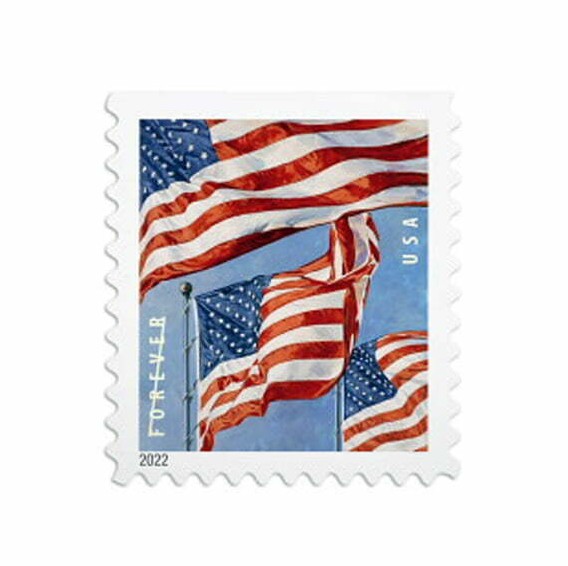
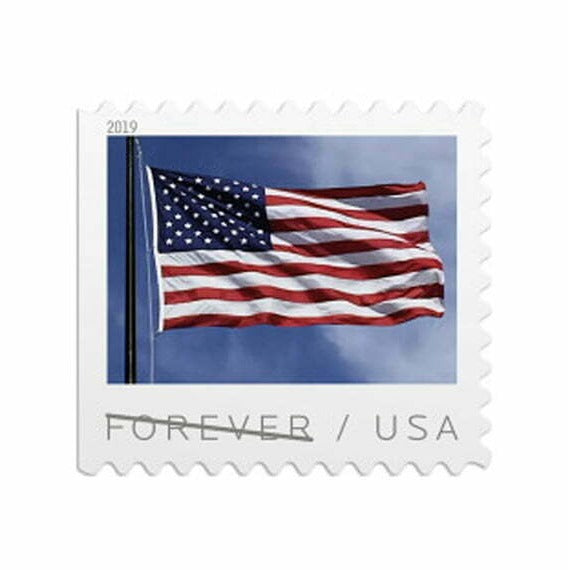
A Forever stamp carries no printed denomination. It is worth whatever First-Class Mail costs for a one-ounce letter on the day it is used — which means stock bought before an increase carries the old price forward indefinitely.
For any organization with predictable mail volume, this turns into a simple policy: hold buffer stock, and buy it ahead of announced adjustments. The saving is guaranteed, requires no risk, and compounds with volume. Most operations that complain about rate hikes are simply buying postage at the moment they need it.
Best deals on Forever stamps
How much buffer is sensible
Enough to cover the gap between rate changes, without tying up capital or creating a storage problem.
Work from your actual monthly volume rather than an estimate. Six months of normal usage is a reasonable target for an organization with steady mail; a business with seasonal spikes should size to the spike, not the average, since that is when postage runs out.
Stamps store indefinitely if kept flat, dry and out of direct light, so the only real constraint is cash flow.
Where the savings go wrong
Budget pressure around a rate increase is exactly when organizations become receptive to a discount that is too large.
Be specific about the ceiling. Authentic postage bought on the secondary market — retail overstock, business liquidations, unused event inventory — supports a discount of roughly 10–20%. A "clearinghouse" offering 40% is not sourcing better than everyone else. The stamps are not genuine.
The consequence is not a slower delivery. Genuine stamps carry phosphor tagging that sorting equipment verifies on every piece; untagged stock gets pulled rather than delayed. For an organization mailing notices, statements or grant correspondence, a batch stopped at the hub is a far more expensive problem than the postage ever was.
| Verification point | Verified specialist | Unvetted "liquidator" |
|---|---|---|
| UV tagging | Correct phosphor response | Flat / inert |
| Adhesive | Permanent bond, federal spec | Temporary peel |
| Audit trail | Commercial US tax invoice | Personal payment app |

A quarterly routine
Four things, once a quarter, and rate changes stop being events:
- Check the Commission docket for pending adjustments and their effective dates.
- Recalculate your per-piece cost from Notice 123 against your actual mail mix — not just letters, but flats and additional-ounce pieces too.
- Review buffer stock against the next two quarters of projected volume.
- Reconcile invoices against mailing logs, so the numbers in the budget match the stamps in the cabinet.
It takes under an hour and it removes an entire category of unpleasant surprise.
Verification on arrival
Whoever supplies you, pull five samples from each replenishment. Genuine self-adhesive stock uses a permanent pressure-sensitive bond and will not lift at the corner or peel in humid conditions. Perforations, color and size should be consistent across the batch. Reconcile the count against the invoice before the stock is put away.
Current fraud patterns are documented by the USPS Office of Inspector General and the FTC — both are more useful than anything circulating on social media.
Where to buy
Full price, no questions: the USPS official store. Bulk at a defensible discount: a specialist such as Forever Stamp Center. And for the day something has to go out immediately, the USPS location finder.
The short version
Rate changes are published before they happen. Forever stamps let you buy ahead of them. Do both, and the next increase is a line you already accounted for rather than an email that ruins a morning.
More on buying Forever stamps
- 👉 Buying Forever Stamps in Bulk Online: A Practical Sourcing Guide
- 👉 The Technical Guide to Presorted Postage Stamps for Marketing Standards
- 👉 Why Reliable Discounted Postage is Key to a Successful Small Business Audit

Stamp enthusiast and part‑time columnist based in Los Angeles. With a background in office administration and a personal passion for collecting Forever Stamps, she provides readers with practical tips on buying, storing, and using stamps effectively.
