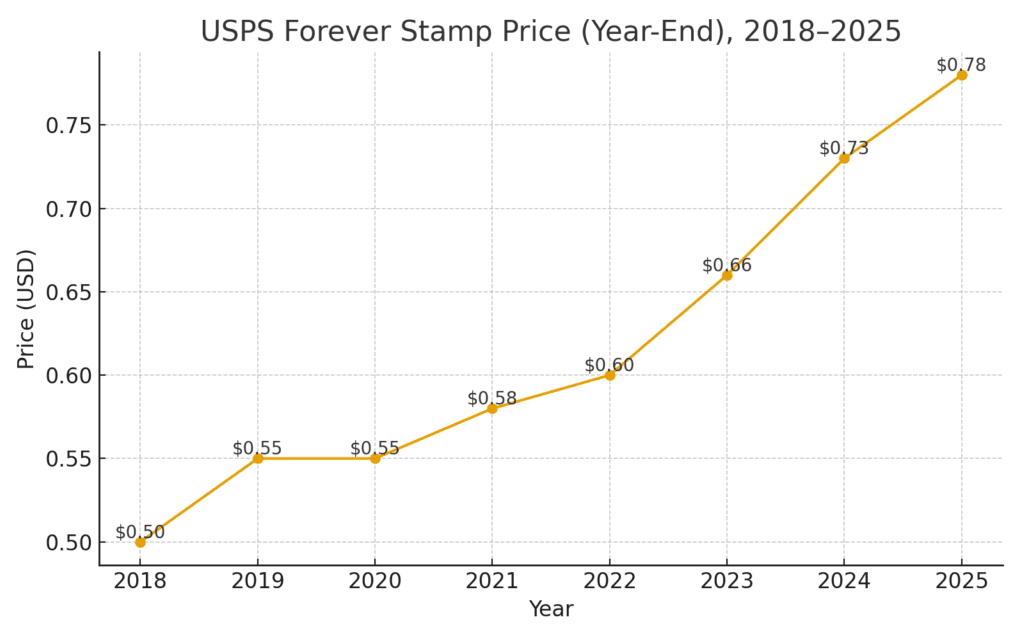
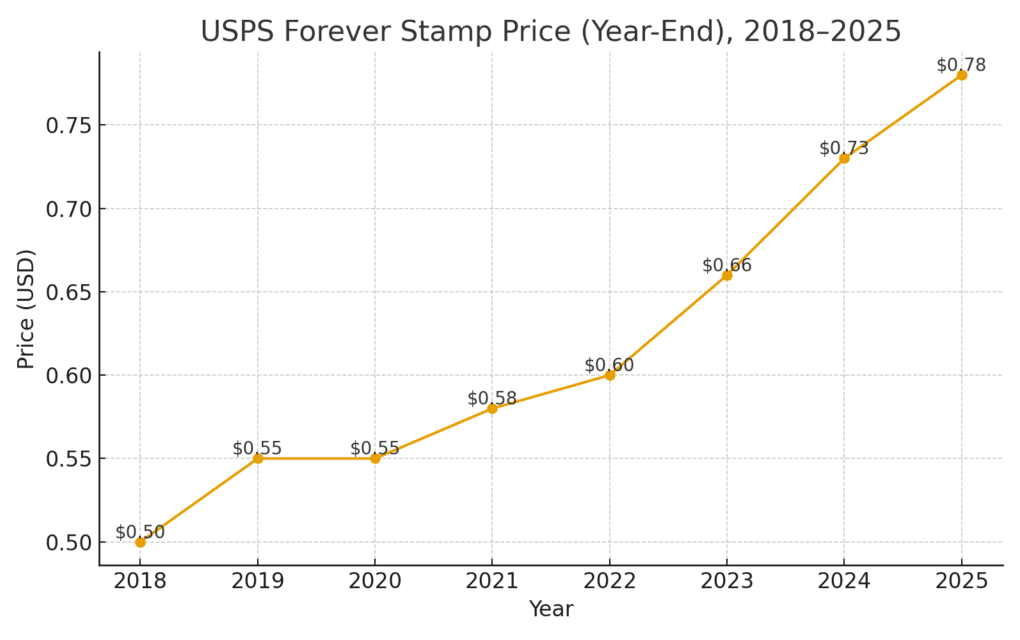
A Forever stamp went from 73¢ to 78¢ on 13 July 2025 — a five-cent step, part of a 7.4% adjustment across mailing services.
Taken alone that is unremarkable. Taken as a series it is the seventh increase since 2021 and the 20th rate adjustment since 2000, and the pace has clearly changed.
The shape of the curve
| Year | Forever stamp |
|---|---|
| 2020 | $0.55 |
| 2023 | $0.63 |
| 2025 | $0.78 |
The interesting part is the acceleration. The move from 2023 to 2025 is a 23.8% increase in two years — considerably steeper than the three years before it.
Best deals on Forever stamps

Why it is happening
Two structural pressures, neither of which is going away.
Volume collapse. Physical mail volume has fallen roughly 68% since 2007. The network still has to reach every address six days a week, so the fixed cost is spread across far fewer pieces.
Funding obligations, including retiree benefits, which sit on the books regardless of how much mail moves.
The adjustments are part of the long-term financial stabilization plan rather than opportunistic pricing, which is why they have been steady rather than reactive.
Some international context
Between June 2018 and June 2023, US stamp prices rose about 26% — from 50¢ to 63¢ — against a global average nearer 55% over the same period, per USPS Office of Inspector General analysis.
US postage is still comparatively cheap and has risen more slowly than most. That does not make the increases painless, but it does argue against reading them as anything unusual.
What buying earlier would have been worth
Concretely, on 3,000 stamps — the kind of quantity a small business or a large mailing consumes:
- Bought in 2020 at $0.55: $1,650. The same postage today costs $2,340 — a difference of $690.
- Bought in 2023 at $0.63: $1,890, a difference of $450.
The mechanism is simply that a Forever stamp carries a one-ounce letter at whatever the rate becomes. The saving is real for postage you go on to use, and nothing at all for postage you do not — which is the boundary worth keeping in mind before stockpiling.

What to expect next
Adjustments have tended to arrive in January and July windows, and the direction has been consistent. Beyond that, treat specific future figures as guesswork — the USPS publishes proposed rates through the regulatory process before they take effect, and that is the only reliable source of a number.
What is safe to plan on is the pattern, not the amount: increases are more likely than not, they arrive on a broadly predictable cadence, and there is always a notice period.
Where to buy
The USPS official store, or a verified surplus channel such as Forever Stamp Center — buying ahead of an announced adjustment for volume you know you will send.
The short version
Prices have risen seven times since 2021 and the pace is increasing, driven by a 68% volume decline against fixed obligations. US postage remains cheap internationally. Buy ahead of announced increases, to your actual forecast.
More on buying Forever stamps
- 👉 Where to Purchase or Sell Stamps Near You
- 👉 Don't Buy Stamps at Midnight: A Pre-Order Checklist
- 👉 Decide Quantity, Design and Timing First

Stamp enthusiast and part‑time columnist based in Los Angeles. With a background in office administration and a personal passion for collecting Forever Stamps, she provides readers with practical tips on buying, storing, and using stamps effectively.
