
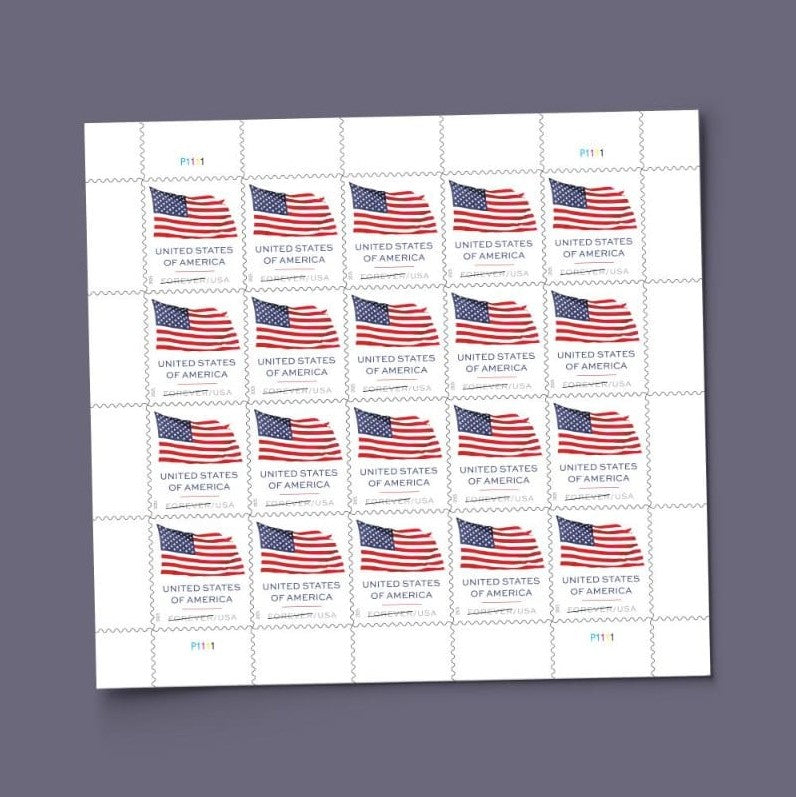
Counterfeit USPS postage has grown alongside the popularity of Forever Stamps, and the better fakes pass a casual glance. What they cannot do is match the production standards the Postal Service works to — and those standards leave physical evidence you can check yourself.
Below are the six methods philatelists and postal experts actually use, in the order they are worth applying.
1. Perforation
The fastest and most reliable test. Three things to look at.
Shape of the holes
Genuine stamps are perforated by industrial machines held to tight tolerances, producing holes that are round, clean and evenly spaced, smooth at the edges, and consistent across all four sides.
Counterfeits give themselves away with triangular or irregular holes, slot-shaped or polygonal perforations visible under magnification, and rough edges left by cheap punching tools.
Method of punching
USPS equipment is high-precision and regularly recalibrated. Counterfeiters work with manual perforators, low-grade rotary tools, or laser-cut imitation perforations — the last of which is common on fake Forever sheets. All three produce inconsistent spacing and unnatural hole shapes.
Degree of perforation
Philately measures perforation by counting holes within 20 mm. A genuine stamp shows a consistent count on every side. Fakes commonly differ edge to edge. Real stamps occasionally deviate slightly from catalog figures, but they deviate predictably.
2. Color
Ink quality is expensive to fake, and it shows.
Genuine stamps use high-grade ink and advanced presses. Colors are pure, bright and stable; registration is precise with no misalignment; gradients run smooth and edges stay clean.
Counterfeits use cheap offset ink. Colors read dull, dirty or faintly gray. Misregistration produces overlapping colors, ghosting and blurred text or outlines. Under a 20× magnifier the image resolves into coarse colored dots rather than a clean impression.
Lighting helps too — inferior ink reflects unevenly across the surface.
3. Printing method
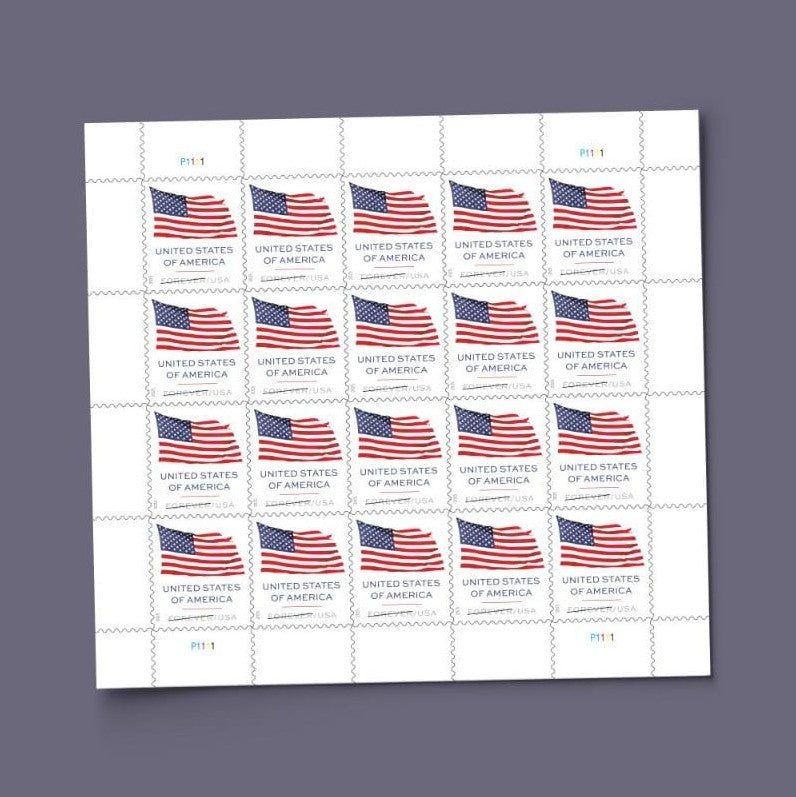
USPS uses several techniques, and engraved stamps are the hardest of all to counterfeit.
A genuine engraved stamp has a raised, tactile surface you can feel with a fingertip, sharp crisp lines, over 250 lines per inch under magnification, and deep ink layers.
Most fakes come off offset presses, photogravure imitation, or low-resolution digital printers. The tells are thick or uneven dots, blurred fonts, weak contrast, overlapping colors, and a completely flat surface with no relief texture at all. A 20× magnifier settles the question in seconds.
4. Size and cutting
Every USPS stamp has a specified size in millimeters, and genuine stamps hold it — with clean machine-cut edges.
Counterfeits typically vary by 0.5 to 1 mm and show uneven trimming, sometimes because they were cut from a fake sheet with scissors or a blade. Experienced collectors use this to catch fake imperforate stamps trimmed to imitate rare varieties.
5. Gum
The back of the stamp tells you as much as the front.
USPS gum has changed over time: dextrin gum in the 1950s, yellowish, glossy and thick; PVA synthetic gum from the 1960s onward, whiter, thinner and less glossy; and pressure-sensitive adhesive on modern self-adhesive stamps.
Fakes show no gum at all, a layer of white paint standing in for gum, sticky adhesive bleeding into the perforations, or uneven coating from poor technique. A stamp that should have gum and does not is a serious warning.
6. Paper
USPS stamp paper is specialized: security fibers, coating layers, anti-counterfeit treatments, and a specific reflectivity under UV light.
Genuine paper has a distinctive texture and sheen, feels firm and consistent, and absorbs ink properly. Counterfeit paper feels too soft or too smooth, looks either overly glossy or flat, absorbs ink unevenly, and lacks both security fibers and the correct UV response.
Under ultraviolet light, genuine stamps fluoresce in specific patterns. Fakes generally do not fluoresce at all — which is exactly how automated sorting equipment catches them.
The simplest protection: buy well
Counterfeiters keep improving, and no checklist stays ahead of them forever. Sourcing carefully removes the problem before it starts.
Safe channels are USPS.com, local post offices, authorized USPS retailers, and reputable philatelic dealers.
If you need discounted postage for business or personal mailing, use a discount seller with a track record — one that authenticates stock before listing it, like Forever Stamp Center. Genuine USPS Forever Stamps below face value is an entirely normal business; postage at half price is not.
🔗 Official sources
U.S. Postal Inspection Service (USPIS)
USPS Official Forever Stamps Information & Pricing

Retired USPS mailroom supervisor with 30 years of service in Chicago. He now contributes columns on Forever Stamps, sharing trusted advice on spotting counterfeit risks and finding reliable discount deals for everyday mailers.
