Nonprofits moved to email for the obvious reason: it is fast and nearly free. What that calculation misses is that donors do not form relationships with a channel. They form them with people, and paper is better at carrying that signal.
What the industry numbers say — and where they come from
A caveat first, because it matters. Most direct-mail statistics in circulation are published by direct-mail vendors and printers, who have an obvious interest. They are worth knowing and worth treating as estimates rather than findings, and your own results will vary by list quality and campaign.
With that said, the direction is consistent across sources:
| Metric | Direct mail | |
|---|---|---|
| Open rate | 75–90% | 20–30% |
| Response rate | 4–6%, up to 9% | 0.1–0.5% |
| Donor retention | +20–30% | Lower |
Commonly cited alongside these: around 73% of donors say they prefer direct mail and 76% consider it more trustworthy than email. The underlying reason is structural rather than sentimental — an envelope cannot be filtered, batched or deleted unopened, so it gets a decision from a person.
Best deals on Forever stamps
Why it works across generations
The assumption that mail is only for older donors does not hold. For people who grew up online, physical mail is unusual, and unusual is what gets attention. The novelty runs in the opposite direction from what most people assume.
Writing one that works
Make it personal. A handwritten signature or a single handwritten line materially lifts response — commonly cited at up to 30%. Even "we couldn't do this without you" in your own hand changes how the letter reads.
Tell one story. One family, one project, one outcome. Aggregate impact numbers inform; a single story creates the feeling that produces a gift.
Make responding easy. A reply envelope for cheques, a QR code for immediate giving, and a personalized URL so you can attribute the response to the mailing rather than guessing.
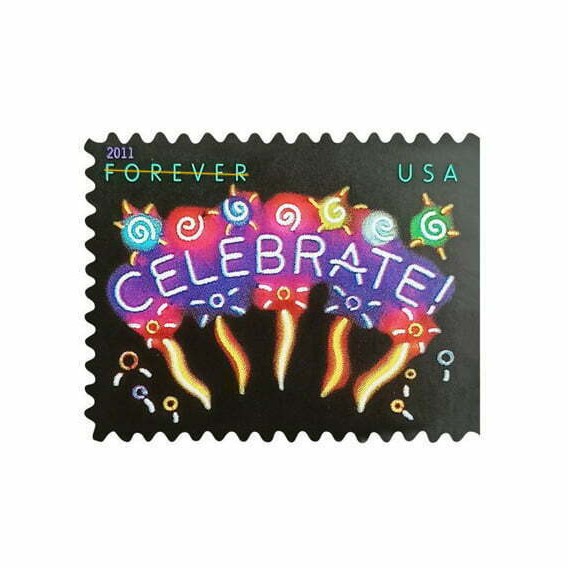
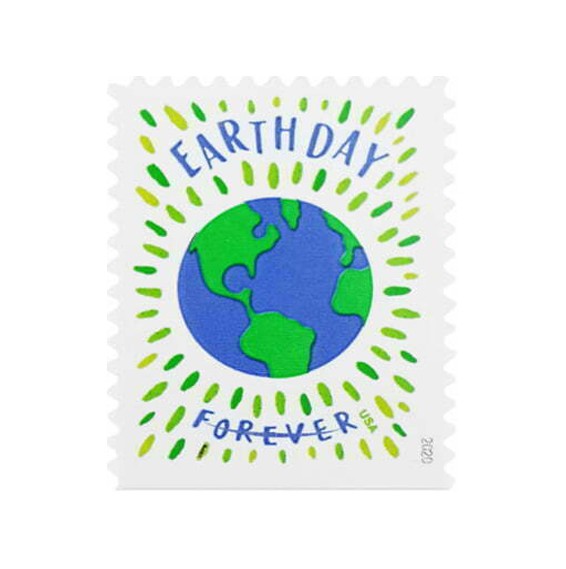
Let the envelope signal care. A holiday stamp and decent paper move the piece from mail to gift. It is a small cost against the impression it creates.
Common questions
Isn't it too expensive? It costs more per contact than email. Vendor figures put returns as high as $32 per $1 on well-targeted campaigns — treat that as an upper bound from an interested source, and measure your own. The honest version: mail costs more and converts enough better that it usually wins on a targeted list, and usually loses on an untargeted one.
How do we measure it? QR codes, unique URLs and coded reply envelopes. Without one of those you are inferring, and inference is how mail programmes get cut.
Should everyone get one? No. Repeat donors, lapsed donors and annual givers. Personalization on a focused list beats volume on a broad one, and it is also what makes the cost work.
Where to buy
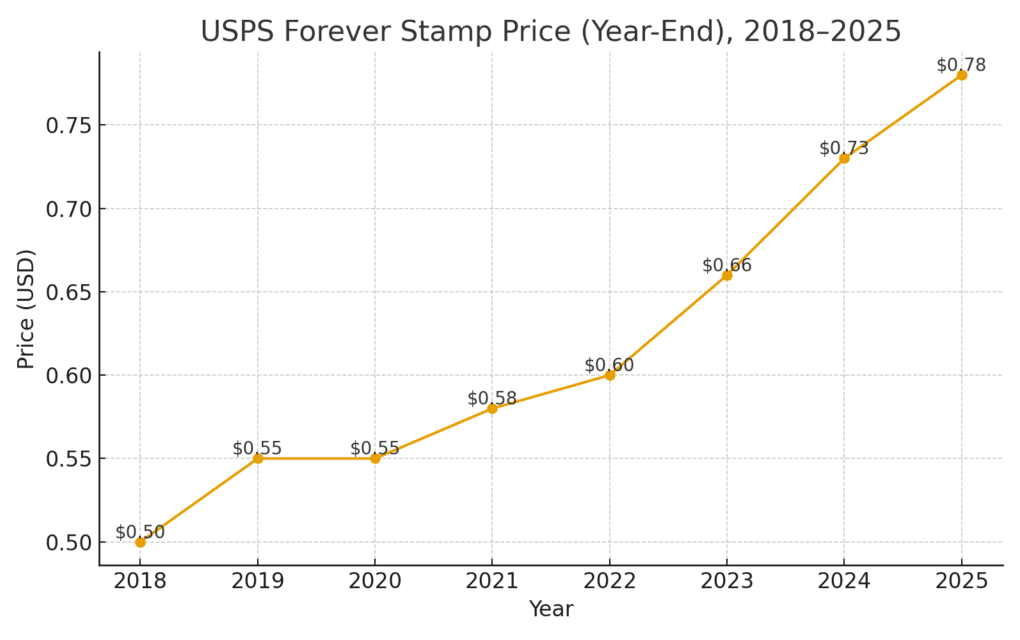
The USPS official store, or a verified surplus channel such as Forever Stamp Center for appeal volumes — buying ahead of a rate change fixes the cost on mail you have already committed to sending.
The short version
Send to a focused list, write one story, sign it by hand, and build in a way to measure the response. Treat the industry statistics as directional rather than precise, and prove the channel on your own numbers.
More on buying Forever stamps
- 👉 Funny Halloween Stamps: The Classic Sets
- 👉 The Message That Ends a Small Shop
- 👉 When a Five-Cent Rate Rise Ate the Margin

Stamp enthusiast and part‑time columnist based in Los Angeles. With a background in office administration and a personal passion for collecting Forever Stamps, she provides readers with practical tips on buying, storing, and using stamps effectively.
