Domestic envelopes are simple enough that most people get them right by instinct. International ones have a specific format, and the part people miss is the last line.
Domestic, in three parts
Return address, upper left. Your full name, then street address or PO Box, then city, state and five-digit ZIP.
Recipient, centred. Name on the first line, street or PO Box on the second, city, state and ZIP on the third.
Stamp, top right. Not top left — the corner matters, and it should not overlap the address block.
Two refinements worth the effort. Write legibly; illegible addresses are a leading cause of returned mail. And use ZIP+4 where you know it — the four extra digits identify a specific delivery segment and measurably speed sorting.
For a business recipient, either format works:
Bailey Smith, Artist
Smith & Co.
900 Ocean Avenue
9th Floor
Los Angeles, CA 80021
Or with Attn: and a role in place of the name, which is the version to use when you do not know who currently holds the position.
International: the format that actually matters
The structure is similar, with three differences that decide whether it arrives.
- Recipient's name and title on the first line, centred as usual.
- Street address on the second.
- City, province or state, and postal code on the third — though some countries, Spain among them, put the postal code before the city. Follow the destination's convention, not yours.
- The country name, in English, in capital letters, alone on the last line.
That last line is the one that gets omitted or buried. It is what the US system reads to route the item out of the country at all, and it needs to be unmistakable and by itself.
Your return address also needs U.S.A. on it. International mail requires a complete return address — without one, an undeliverable item has nowhere to go back to from another country's postal system.

Getting the postage right
Postage is determined by weight, shape and destination. For an ordinary domestic letter, one First-Class stamp does it.
The rule of thumb is one ounce (28 g) per stamp — but the better solution above one ounce is a single two-ounce stamp rather than two Forever stamps, which overpays.
Limits worth knowing: First-Class letters cannot exceed 3.5 ounces (99 g), and First-Class envelopes — the larger flat format — cannot exceed 13 ounces (369 g). Past those, you are in a different class entirely.
Large envelopes and small packages start around $1.20. Odd shapes and rigid items carry surcharges. If you are unsure, take the item to a counter and have it weighed rather than guessing.
Why Forever stamps solve the recurring problem
Rates change regularly, and a drawer of older denominated stamps quietly becomes insufficient without you noticing. Mail sent with them is underpaid and comes back.
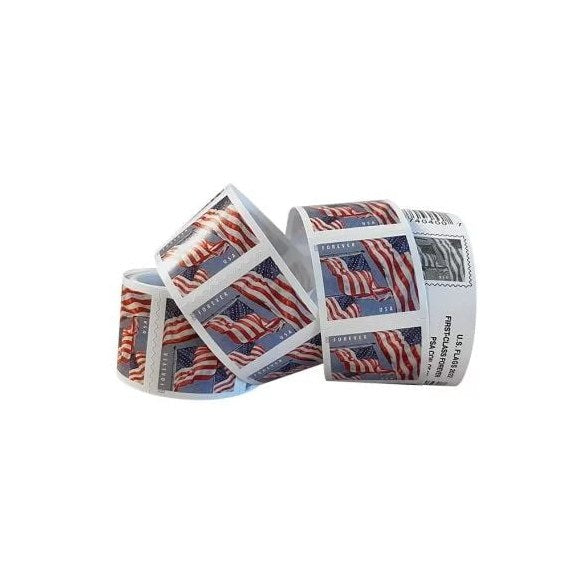
Forever stamps avoid this by design: whatever you paid, they cover a one-ounce domestic letter at the current rate. A supply bought now works after the next increase without arithmetic.
Best deals on Forever stamps
The other reason to keep a stock is that it removes the late-evening trip and the panic purchase, which is where bad buying decisions get made.
Where to buy
The USPS official store for Global Forever and specific denominations, or a verified surplus channel such as Forever Stamp Center for domestic postage in quantity.
The short version
Return address upper left, recipient centred, stamp top right, ZIP+4 where you have it. Going abroad: destination country in English capitals, alone on the last line, and U.S.A. in your return address.
More on buying Forever stamps
- 👉 The Top-Right Corner Is a Right-Handed Habit
- 👉 Underpaid Mail: Who Pays
- 👉 What Envelope Size Needs Extra Postage?

USPS specialist based in Los Angeles with extensive experience in postal operations and customer service. Certified in mail management and trained at the USPS Business Mail Academy, she offers reliable guidance on Forever Stamps and practical mailing solutions.
