If you send real mail — thank-you notes, holiday cards, invitations — the rising price of a stamp is a small cost that arrives in a large batch.
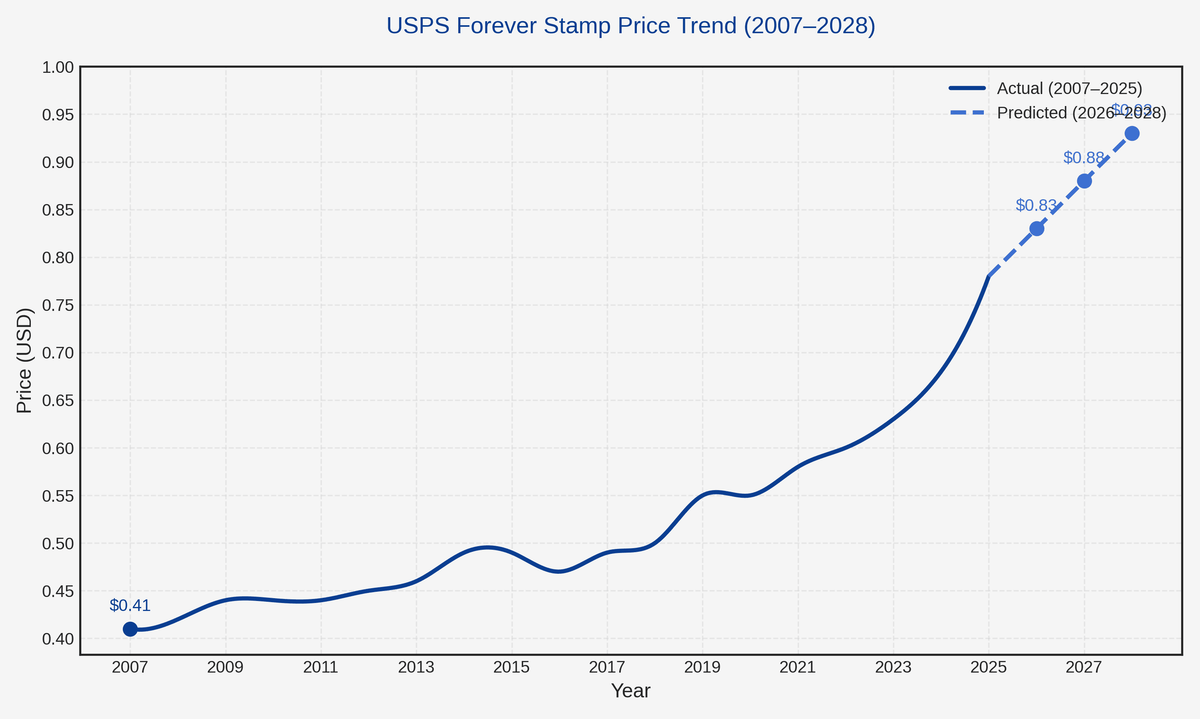
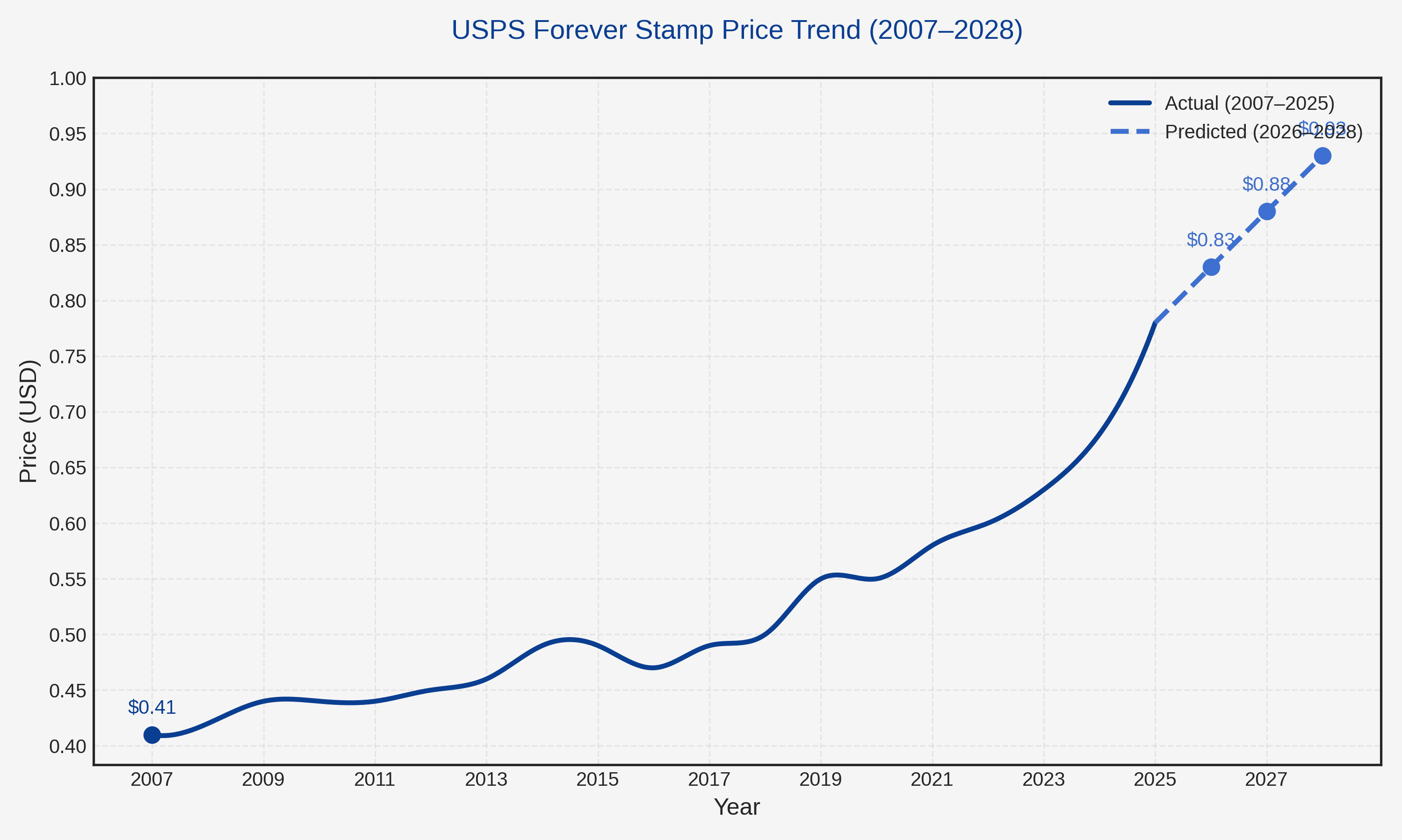
Two things are currently known. Forever stamps moved to 78 cents in July 2025, and the USPS has announced no change before July 2026. Everything past that date is forecast, not fact.
What the forecasts assume — and why to treat them as forecasts
The common projection runs roughly 83 cents in late 2026, 88 cents in 2027, 93 cents in 2028. That is extrapolation from the recent pattern of adjustments, not an announced schedule, and the USPS has not published rates that far out.
Treat the numbers as a planning range rather than a prediction. They are useful because the direction has been consistent, not because anyone knows the figures.
The arithmetic on 200 pieces a year
| Year | Per stamp | Annual total |
|---|---|---|
| 2025 | $0.78 | $156 |
| 2026 | $0.83 projected | $166 |
| 2027 | $0.88 projected | $176 |
| 2028 | $0.93 projected | $186 |
About $30 more over the period for exactly the same letters. Not ruinous — but it is the sort of cost that quietly makes people send fewer cards.
A wedding sharpens it. Three hundred invitations at 78 cents is $234; at 93 cents, $279. Same guest list, same envelopes, later date.
Best deals on Forever stamps
What a Forever stamp actually does for you
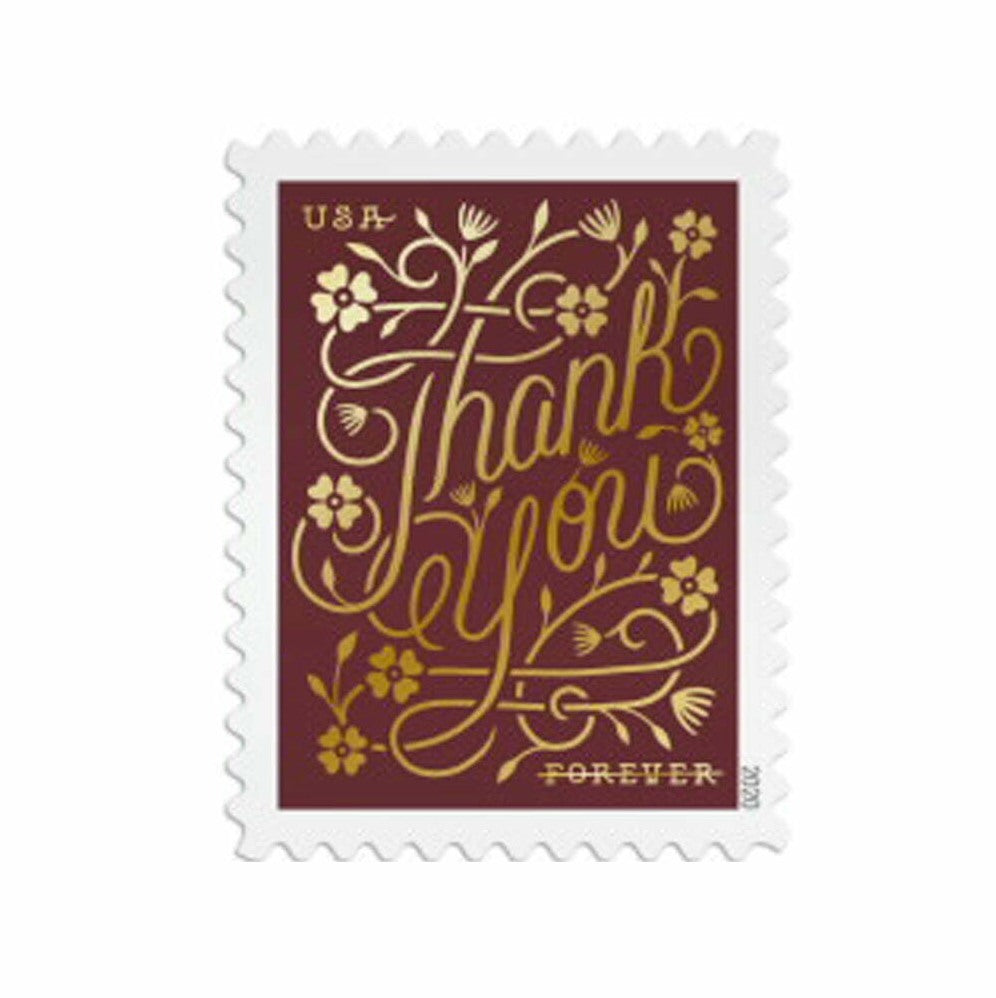
This is the whole mechanism, and it is simple: a Forever stamp carries a one-ounce letter at whatever the rate is on the day you use it. Buy at 78 cents, use it after the rate reaches 93, and it still covers the letter.
So if you know you will mail 200 things next year, buying that postage now fixes the price. It is not a trick or a loophole — it is what the product is designed to do.
The limit is your own forecast. Buying for mail you will not send is not a saving; it is a drawer full of stamps.
The counterfeit math
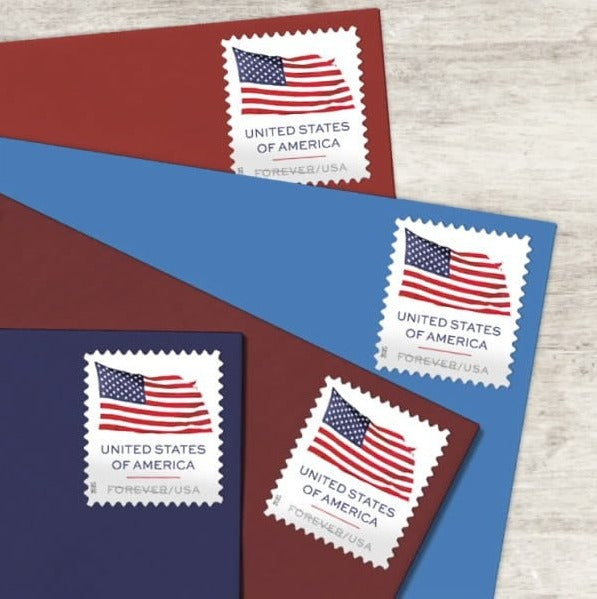
Counterfeit postage circulates heavily on discount marketplaces, unknown seller listings and social ads. The pattern is consistent: 50% off, "100 for $20", urgent framing.
Suppose you mail 500 pieces a year and a site offers half price. The apparent saving is about $100. If the stamps are fake, you lose the $100, plus the hours spent addressing 500 envelopes, plus reprinting and remailing, plus the awkwardness of everyone you wrote to receiving a postage-due notice. The cheap option lands somewhere between $300 and $500.
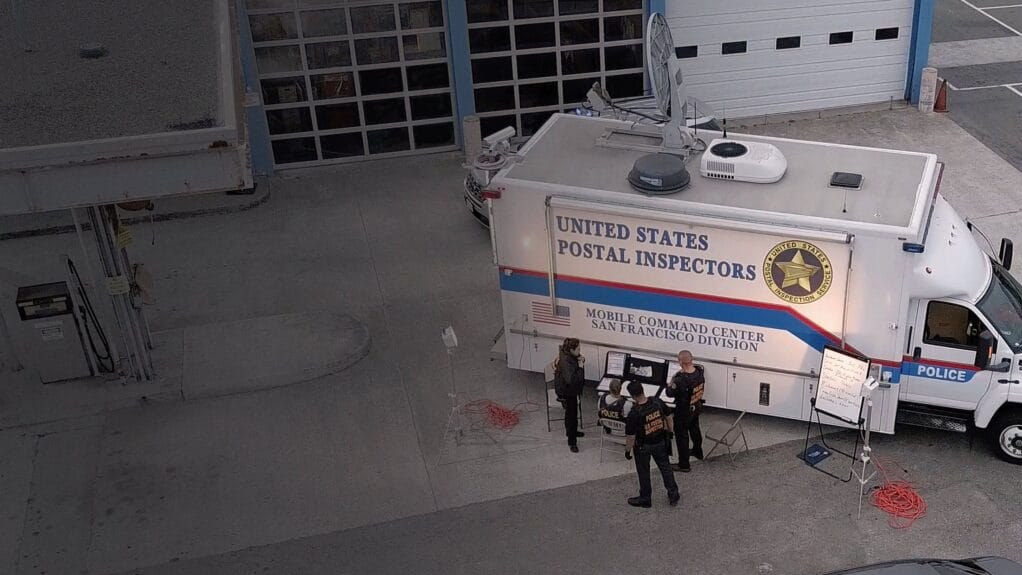
Genuine discounted stamps do exist. They are modestly discounted because they were bought in bulk or came from business liquidations — not because postage can be manufactured cheaply. The U.S. Postal Inspection Service publishes warnings on the current schemes.
The other reason to buy early
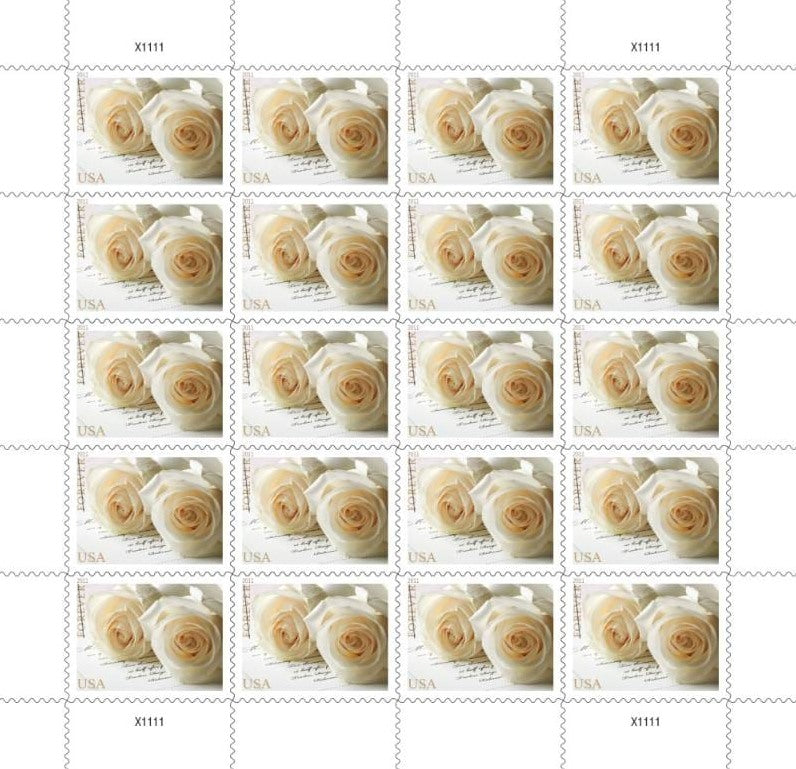
It is not only price. It is the evening you are at the kitchen table with a stack of addressed envelopes and no stamps, and the counter is closed.
Buying a year's postage in one go removes that entirely — and removes the moment of urgency that makes a half-price listing look reasonable.
Where to buy
The USPS official store, or a verified surplus channel such as Forever Stamp Center — modest discount, real postage, bought before the next adjustment window.
The short version
Estimate what you will actually mail in a year, buy that many stamps before the next increase, and ignore anything advertised at half price. The projections past 2026 are estimates; the mechanism that makes buying early work is not.
More on buying Forever stamps
- 👉 How to Save Money on Postage with Discount Stamps
- 👉 How to Find Postage Stamps at a Discount?
- 👉 The Message That Ends a Small Shop

Stamp enthusiast and part‑time columnist based in Los Angeles. With a background in office administration and a personal passion for collecting Forever Stamps, she provides readers with practical tips on buying, storing, and using stamps effectively.
