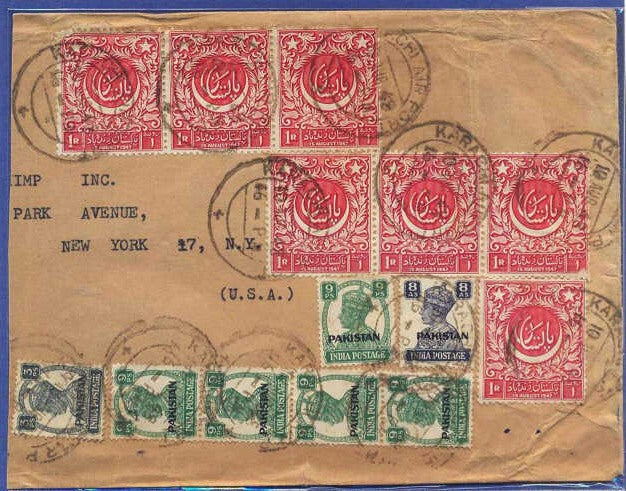
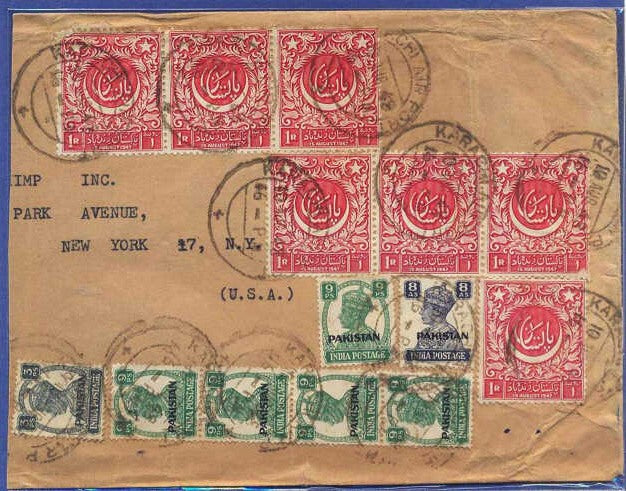
The postage stamp is such a settled object that it is easy to miss what it changed. Before it existed, mail was generally paid for on delivery — by the person receiving it.
Think about what that means in practice. The recipient could refuse. The recipient might not have the money. And the sender, paying nothing at the point of posting, had no reason at all to keep a letter short or light.
The system was slow, contested, and full of arguments on doorsteps.
What the stamp fixed
Prepayment. The sender pays, up front, and the stamp is the receipt that proves it. Three problems disappear at once:
- The recipient can no longer decline to pay, so delivery becomes reliable.
- The post office collects before it does the work rather than chasing payment afterwards.
- The sender now has a direct interest in keeping mail within a size and weight — because the sender is the one paying for it.
That third point is why weight and dimension limits are the backbone of postal pricing to this day. Prepayment is what makes them enforceable.
The Penny Black
Britain issued the first adhesive postage stamp in 1840: the Penny Black, carrying an engraved portrait of the young Queen Victoria. It covered a letter under half an ounce anywhere in the United Kingdom.
Worth correcting a common description — it was gummed, not self-adhesive. Victorian stamps had to be licked or damped. Self-adhesive postage arrived a very long time afterwards.
Before the 1840s, mail was marked paid with ink and a hand stamp, usually cut from wood or cork. Which is where the word comes from: a stamp was originally the thing that made the mark, not the piece of paper.
What happened next was not subtle
Letter volume in Britain went from around 76 million to roughly 350 million a year within about a decade of the change.
Nearly fivefold. Not because people suddenly had more to say, but because a fixed, prepaid, affordable price removed every reason not to write. The other countries followed quickly once that number was visible.
What "philately" actually means
You will often see philately glossed as Greek for "love of stamps" — philos, loving, plus something meaning stamp. The second half is wrong, and the true version is better.
The word joins philos to ateleia: exemption from payment. The person receiving a prepaid letter owed nothing, and that freedom-from-charge is what the coiner of the word picked out as the defining novelty. Not the picture. Not the paper. The fact that nothing was due at the door.
Which means the name of the hobby is really about the reform described above — and the collectors named it after the right thing.
Where it stands now
Volumes have fallen worldwide as email took over. Iceland's postal service went as far as announcing it would stop issuing new stamps for collectors, with sales down and stock still on hand.
But the mechanism has not been improved on. Prepaid postage at a fixed price, proved by something stuck to the envelope, is still how physical mail works nearly two centuries later. Very little from that era is still running unmodified.
Why any of this matters to a postcard
Because the postcard rate is the same idea taken further: a lower fixed price for a lighter, simpler item, prepaid by the sender. The card qualifies or it does not, and the price does not vary by distance or by who receives it.
And the thing a stamp buys has not changed either. An email arrives in a list. A card arrives in a hand, with a design on it that somebody chose on purpose.
Best deals on Forever stamps
Forever stamps are the modern extension of the same principle — prepayment, but with the price locked at the moment of purchase rather than the moment of use. Buying below face value simply lowers what the prepayment cost you.
Where to buy
Current postcard and letter rates from USPS. Retired designs at a discount from a verified surplus channel such as Forever Stamp Center — see postcard-rate stamps or the full catalogue.
The short version
Recipients used to pay, and could refuse. The Penny Black moved payment to the sender in 1840, volume in Britain rose almost fivefold within a decade, and every rule about weight and size that governs your mail today follows from that one change.
More on buying Forever stamps
- 👉 There Was No 2022 Postcard Stamp
- 👉 Postcard Rate Rules: The Size Limits That Decide What You Pay
- 👉 A Letter Costs the Same to Cross the Street or the Country

USPS specialist based in Los Angeles with extensive experience in postal operations and customer service. Certified in mail management and trained at the USPS Business Mail Academy, she offers reliable guidance on Forever Stamps and practical mailing solutions.
