
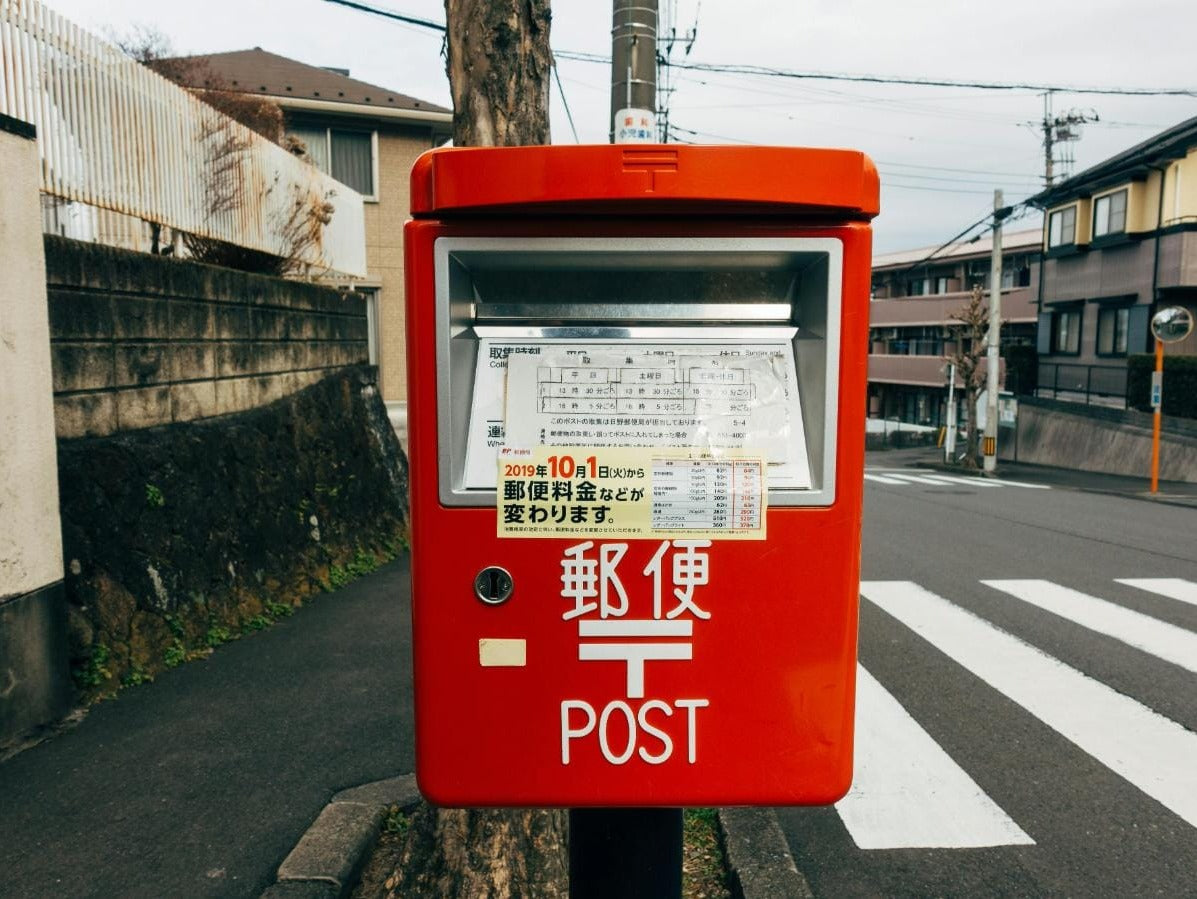
Online sellers treat physical mail as obsolete. The response numbers say otherwise, and the gap is large enough to be worth acting on.
Postcard campaigns typically see response rates between 6% and 11%. Email campaigns are usually measured in fractions of a percent. Even allowing for the difference in cost per contact, that is not a close comparison.
Why it works
Around 73% of consumers say they prefer to learn about a brand through physical advertising, and people check a physical mailbox every few days because it also carries things they cannot ignore — bank statements, government notices, bills.
Your postcard arrives in that stack rather than in a promotions tab. It gets handled, and handling is most of the battle.
Despite the emphasis on digital, more than half of marketers — around 56%, per industry surveys — continue to use direct mail. It is a channel that quietly kept working while the attention went elsewhere.
The scale it operates at is easy to underestimate. IKEA's catalogue was distributed to customers across 33 countries at roughly 200 million copies a year — one of the most successful marketing publications ever produced, delivered by post.
What to actually send
The useful applications for an online seller are all about customers you already have:
Reorder prompts. For consumables, a card timed to when the product runs out. You know the purchase date; the timing is straightforward.
Win-back cards. Customers who bought once and stopped. Email to lapsed customers is heavily filtered; a card is not.
Thank-you cards with a QR code linking to a reorder page, a care guide or a loyalty programme. The card is physical and the destination is measurable, which gives you attribution the mail alone would not.
New product announcements to existing buyers of a related item.
What these have in common: they build a direct relationship with people who already bought from you, on a channel you control.
Testing it properly
Do not roll a design out across your whole list. The method that works:
Take around 5,000 addresses from real orders and split them into 10 groups of 500. Vary one dimension per group — design, offer, format — and use a distinct QR destination or code per group so responses are attributable.
Give it one to two weeks to collect data, identify the version that performs, and only then scale it. Sellers running mature programmes send 100,000 pieces a month, but they arrived there by testing rather than by guessing.
Expect the first campaign to underperform. Response rates improve as the design and offer are refined against your specific audience — the 6–11% band is where established programmes land, not where they start.
One boundary worth being explicit about
Use direct mail for marketing, retention and service. Do not use it to solicit product reviews, and do not offer anything in exchange for one.
Marketplaces prohibit incentivised reviews and enforce it with account suspension — large numbers of sellers have lost their businesses this way, and the enforcement has tightened rather than relaxed. Any tactic whose appeal is that the platform cannot see it is a tactic that ends the account when the platform can.
If you want reviews, use the marketplace's own request mechanism, which is neutral and permitted. Keep your mail programme entirely separate from it — that way the channel stays an asset rather than becoming evidence.
Practical notes on the mail itself
- Postcards are cheaper than letters and need no envelope or insertion labour.
- Address quality decides everything. Undeliverable mail is spend with no possible return; clean the list before each campaign.
- Use a real stamp on high-value segments. A metered indicia reads as bulk; a stamp reads as correspondence, and on a small targeted list the difference in open behaviour is worth the cents.
- Buy the postage below face. At campaign volumes that is where the margin on the channel comes from.
Best deals on Forever stamps
Postcard-rate stamps cost less than letter rate, and surplus channels carry both below face. For a programme sending tens of thousands of pieces, the postage line is worth managing as deliberately as the creative.
Where to buy
The USPS official store for postcard and letter rates, or a verified surplus channel such as Forever Stamp Center for campaign volume.
The short version
Direct mail responds at 6–11% against a fraction of a percent for email. Use it for reorders, win-backs and thank-you cards with a trackable QR code — test on 500-address cells before scaling, and keep it entirely away from review solicitation.
More on buying Forever stamps
- 👉 A Letter Cannot Be Spam-Filtered
- 👉 How to A/B Test Your Postage
- 👉 There Is No USPS Coupon Code. There Is Presort.

USPS specialist based in Los Angeles with extensive experience in postal operations and customer service. Certified in mail management and trained at the USPS Business Mail Academy, she offers reliable guidance on Forever Stamps and practical mailing solutions.
