
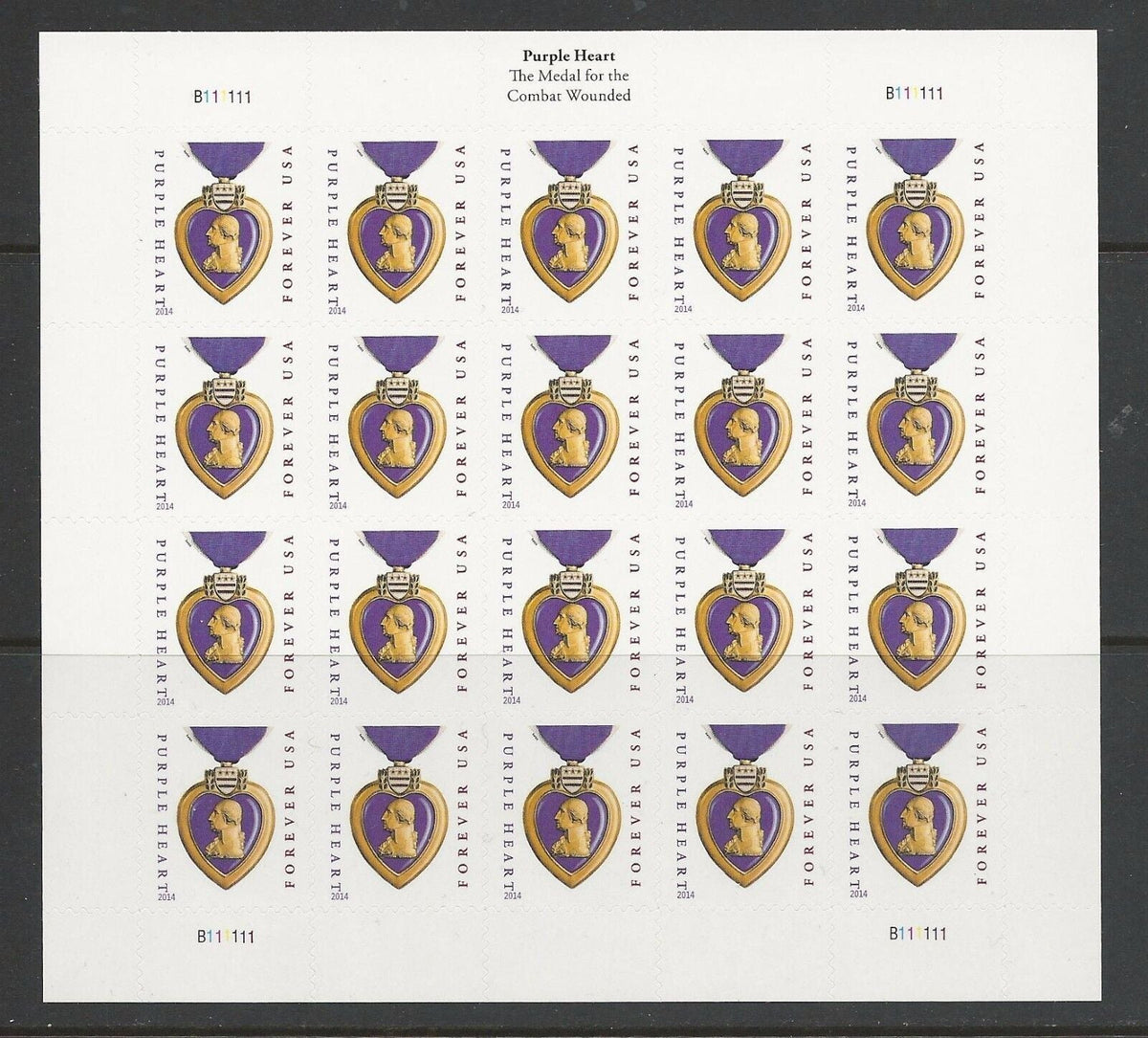
Open a US stamp catalogue printed before the Second World War and something looks wrong. The stamps are not shown. You get a fragment of a frame, a corner, a piece of border — and even those at the wrong size.
That was not a printing limitation. It was the law, and it stood from 1872 to 1938.
The rule
Section 5430 of the Revised Statutes made it a crime to produce anything in the likeness or similitude of any obligation or security of the United States. Section 5413 defined postage stamps as exactly that — obligations of the United States, in the same legal category as currency.
Which means an accurate picture of a stamp was, in law, close to counterfeiting. Catalogue publishers responded by showing as little as they could get away with: the 1902 Scott catalogue's Bank Note pages carry partial frames only, and not at the size of the real thing.
The first relaxation
In 1923 the rule was loosened slightly: full borders could be shown, provided they were reproduced at four times actual size. The 1924 Scott Specialized catalogue shows what that looked like in practice — enormous outlines, no possibility of confusion with a real stamp.
The logic is consistent throughout everything that follows. Wrong size, no danger.
The Hayden-Duffy Act
On 17 January 1938, Congress finally permitted full illustrations, with two conditions:
- Size. Less than 75 percent, or more than 150 percent, of the actual stamp. Never close to life size.
- Colour. Black and white only. Colour was flatly prohibited.
Compliance was imperfect. A 1954 souvenir sheet from the Bison Philatelic Society of Buffalo, New York — produced for a St Patrick's Day party — was modelled on the 1931 30¢ brown American Buffalo stamp (Scott 700). The sheet met the size rule and then printed its stamp-like image in the same brown as the original. That colour was the violation, from a philatelic society, at a party.
Colour becomes legal
Public Law 90-353, of 20 June 1968, permitted illustrations of US and foreign postage stamps in colour. The size restriction was retained in the same shape: less than three-fourths, or more than one and one-half, of the original in linear dimension.
Later rules allowed reproduction at actual size in colour — on condition that a diagonal line is drawn through the stamp's value.
And then somebody used one as postage
The diagonal line does not help if nobody looks.
In 1994, USPS licensed Hallmark to produce a sheetlet of nine peelable "love" labels as envelope decorations, reproducing the 1985 22¢ Love stamp (Scott 2143). A cover exists franked with one of those labels — a decorative sticker accepted and processed as if it were postage, because a clerk did not look closely.
No comparable product appears to have been licensed since. One cover was enough.
Why this still matters
Because the reasoning has not gone away, only the enforcement mechanism. A postage stamp is a financial instrument: it represents prepaid value, and anything that can pass for one is a problem.
Every counterfeit-detection rule in circulation today descends from the same premise. So does the fact that discounted postage from an unaccountable seller is worth being suspicious of — the offence in the nineteenth century was making something that resembled a stamp, and that is still precisely what a counterfeiter does.
Best deals on Forever stamps
The legitimate version is the opposite of a copy: genuine stamps, printed by the government, sold on because someone bought more than they needed. That is what surplus Forever stock is, and it is why the discount is modest — a large one would mean the stamps were made rather than bought.
Where to buy
Current issues from USPS. Genuine retired stock from a verified surplus channel such as Forever Stamp Center — see the full catalogue.
The short version
From 1872 to 1938 a US stamp could not legally be illustrated in full, because stamps are legally obligations of the United States. Full illustrations came in 1938 at restricted sizes, colour in 1968, and same-size colour only with a line through the value.
More on buying Forever stamps
- 👉 Two Popular Ways to Spot a Fake Stamp That Don't Work
- 👉 The Most Counterfeited Stamp in America Is the Flag
- 👉 Commemoratives Exist Because Collectors Buy Stamps They Never Use

USPS specialist based in Los Angeles with extensive experience in postal operations and customer service. Certified in mail management and trained at the USPS Business Mail Academy, she offers reliable guidance on Forever Stamps and practical mailing solutions.
