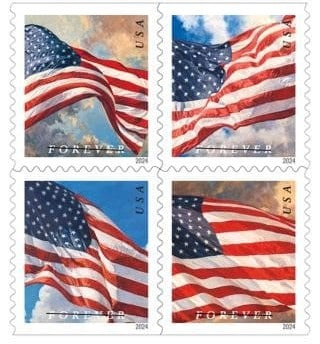
Every guide to counterfeit postage tells you the same thing: if it is too cheap, it is fake. That rule is real and it is also incomplete, because the smarter operations have worked it out too.
A small business owner bought 100 Forever stamps for $80 from a marketplace listing. At a face value of $0.73, that is eighty cents a stamp — above face. Nothing about the price triggered suspicion, which was the point.
The stamps were counterfeit. The paper felt thin, the colours were slightly off, and the post office confirmed it. Days later the buyer's bank flagged an attempted $500 charge — the seller had the card details too.
What that changes about how you check
Price screens out the crude operations. It does not screen out the ones that have priced themselves into the normal range, and those are the ones taking card details as well as money.
So price is the first filter, not the only one. Two bands to hold in mind:
- Far below face — counterfeit, decided, no further thought needed.
- At or slightly above face from an unknown seller — no information either way. This is where you actually have to look at the seller.
A legitimate discount lives in a narrow band: roughly 5–10% below face from a verified dealer, occasionally more on genuine bulk. A seller offering 20–50% off is in fraud territory; a seller offering nothing off is either official, a retailer, or unexamined.
Best deals on Forever stamps
Protecting the payment, not just the purchase
The stamps were the smaller loss. Protecting the card matters more than protecting the eighty dollars:
- Use a credit card, not a debit card. Chargeback rights are stronger and the money is not gone from your account while you argue.
- Refuse peer-to-peer transfers. A seller who wants payment by transfer app or wire has chosen an irreversible rail deliberately.
- Consider a virtual card number or a payment processor that keeps your real details off the merchant's system entirely.
- Check for a secure connection before entering anything — necessary, though far from sufficient on its own.
Where the legitimate options actually sit
| Channel | Discount | Delivery | Risk |
|---|---|---|---|
| Official postal store | None | 5–10 days | None |
| Post office counter | None | Immediate | None |
| Large retailers | 0–5% on bulk | Immediate | Very low |
| Verified surplus dealer | 5–10% | 3–7 days | Low, once vetted |
| Open marketplaces and classifieds | Varies wildly | Varies | High — and where card fraud clusters |
Buying from the official store has no discount and no ambiguity, which for small quantities is usually the right trade. The saving only becomes worth the vetting effort at volume.
The scale of it
Counterfeit postage is not a fringe problem. Reporting over the past few years has covered large numbers of buyers taken in by fake stamp sites, including sites that ranked well in ordinary search results — which is worth knowing, because "I found it on the first page" is not evidence of anything.
The U.S. Postal Inspection Service maintains current guidance on the schemes in circulation, and is a better first stop than a search engine.
Where to buy
The USPS official store when the quantity is small enough that a discount does not matter, or a verified surplus channel such as Forever Stamp Center when volume makes 5–10% worth having.
The short version
Cheap postage is obviously fake. Reasonably priced postage from an unknown seller is not obviously anything — check the seller, pay with a credit card, and remember that on a fraudulent site the stamps may be the least valuable thing they take from you.
More on buying Forever stamps
- 👉 Two-Ounce Stamps for Heavy Letters and Invitations
- 👉 There Is No USPS Coupon Code. There Is Presort.
- 👉 A Letter Cannot Be Spam-Filtered

Currently working at USPS in Chicago, he has more than 15 years of experience in bulk mailing and logistics. His columns focus on Forever Stamp trends, helping businesses and individuals make cost‑effective mailing decisions.
